TechReview's post on 'An All-Electric Car That Accelerates Faster Than a Ferrari' writes how Silicon Valley is shifting towards becoming a centre for researching and developing electric cars - a re-invention of Silicon Valley?
"Silicon Valley thinks it can do what Detroit could not -- create a thriving business selling electric cars. In the 1990s, General Motors and other automakers spent billions to develop battery-powered vehicles, but they flopped because most couldn't travel more than 100 miles before having to recharge.
By tapping the Bay Area's engineering expertise and culture of innovation, a cluster of entrepreneurs, engineers and venture capitalists here are racing to bring their own electric cars to market. But unlike the Detroit and Japanese automakers, they're working on high-performance sports cars for wealthy car enthusiasts.
At least three Silicon Valley startups -- Tesla Motors of San Carlos, Wrightspeed Inc. of Woodside and battery maker Li-on Cells of Menlo Park -- are among a small cadre of companies nationwide developing electric cars or components."
Wednesday, June 28, 2006


Network sensors to Secure America's Power Grid
In the article 'Securing America's Power Grid' from ScienceDaily it discusses how networks of wireless sensors are being developed to monitor the US power grid to better respond to weather disasters, or terrorist incursions:
"An Iowa State University research team led by Arun Somani, chair and Jerry R. Junkins professor of electrical and computer engineering, is working to develop a network of wireless sensors that could monitor the country's electricity transmission system. While the sensors could pick up suspicious activity at power poles, they'd be especially useful at quickly locating any breakdowns. That could allow power companies to react in time to prevent power disruptions from cascading into blackouts. And the monitoring system could also help power companies quickly locate problems when severe weather tears down electrical lines."
It seems that remote wireless sensors will soon be the norm for regulation and monitoring?
"An Iowa State University research team led by Arun Somani, chair and Jerry R. Junkins professor of electrical and computer engineering, is working to develop a network of wireless sensors that could monitor the country's electricity transmission system. While the sensors could pick up suspicious activity at power poles, they'd be especially useful at quickly locating any breakdowns. That could allow power companies to react in time to prevent power disruptions from cascading into blackouts. And the monitoring system could also help power companies quickly locate problems when severe weather tears down electrical lines."
It seems that remote wireless sensors will soon be the norm for regulation and monitoring?
Monday, June 26, 2006
Everyware - ubiquitous computing
Adam Greenfield - author of 'Everyware - The dawning age of ubiquitous computing' gave a talk at the Institute For The Future. Here are somenotes:
"AG's notion of ubicomp draws on Weiser's vision of computing being "invisible but everywhere around us" (weiser 1990), built upon very cheap computing "spread around like grass seeds", and "embedded, wireless, imperceptible, multiple, and post-gui" (AG, 2006).
This would generate new kinds of modalities of interaction, particularly design "dissolving into behavior."
It would also allow for the instantiation of computing and interaction with it at a wide variety of physical scales, at the level of the body (Body Media SenseWear), the object, the room (Sensasell), the building, the street (Shinjuku RFID lamppost).
But they're also networked together, which allows for some really interesting interactions; and hard to see, literally and figuratively (because you can't detect or sense embedded computing). So what does this look like?"
Read the rest of the post at IFTF's Future Now blog
"AG's notion of ubicomp draws on Weiser's vision of computing being "invisible but everywhere around us" (weiser 1990), built upon very cheap computing "spread around like grass seeds", and "embedded, wireless, imperceptible, multiple, and post-gui" (AG, 2006).
This would generate new kinds of modalities of interaction, particularly design "dissolving into behavior."
It would also allow for the instantiation of computing and interaction with it at a wide variety of physical scales, at the level of the body (Body Media SenseWear), the object, the room (Sensasell), the building, the street (Shinjuku RFID lamppost).
But they're also networked together, which allows for some really interesting interactions; and hard to see, literally and figuratively (because you can't detect or sense embedded computing). So what does this look like?"
Read the rest of the post at IFTF's Future Now blog
Tele-care wristwatch PC
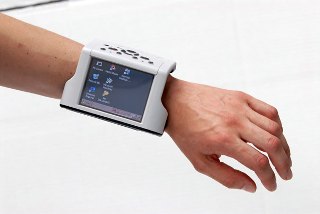
A new wrist-worn PC has been developed and demonstrated to the military forces. This device, which can run Linux or Windows CE, is a hands-free computer which handles wireless networking and GPS tracking. It also comes with a 240 x 320 pixels touchscreen and has a battery which can last about 8 hours. It only weighs 300 grams.
Yet more importantly it can be used by healthcare or law enforcement personnel. According to specifications:
"The wireless functionalities of the WL 1000 ensure continuous connectivity no matter the location of the user, by utilizing Wi-Fi, Bluetooth, and GPS capabilities. Using Linux or Windows CE operating systems, the unit can be quickly configured to access any remote host system through integrated wired or wireless interfaces."
Imagine the potential benefits for tele-care workers in the field as well as emergency response teams?
Via ZDNet
The future of telecom is in....Wales
Interesting developments in communications architecture - Cardiff will be the first UK city to benefit from BT's planned restructuring in how information is received and sent:
"The city of Cardiff may seem like an unlikely place for a technological revolution, but in a few months the capital of Wales will be home to a new kind of telecommunications network that could drastically change the way phone calls, Web pages, e-mail and other data are shipped to and fro.
BT, the incumbent phone company in the United Kingdom, is planning to shut off all of its legacy phone networks - a hodge podge of systems that includes the traditional "circuit switched" system that has served as the architecture for delivering phone calls for more than a century - by 2010...
...BT is creating an open, standards-based platform for which anyone can develop new applications. In other words, the phone has the potential to become more like the Internet with its proliferation of cool new Web sites, tools and services.
"This whole thing is based on openness and transparency," says Paul Reynolds, chief executive of BT's wholesale operations. "We want to allow experimentation by application developers."
Via Fortune/CNNMoney
"The city of Cardiff may seem like an unlikely place for a technological revolution, but in a few months the capital of Wales will be home to a new kind of telecommunications network that could drastically change the way phone calls, Web pages, e-mail and other data are shipped to and fro.
BT, the incumbent phone company in the United Kingdom, is planning to shut off all of its legacy phone networks - a hodge podge of systems that includes the traditional "circuit switched" system that has served as the architecture for delivering phone calls for more than a century - by 2010...
...BT is creating an open, standards-based platform for which anyone can develop new applications. In other words, the phone has the potential to become more like the Internet with its proliferation of cool new Web sites, tools and services.
"This whole thing is based on openness and transparency," says Paul Reynolds, chief executive of BT's wholesale operations. "We want to allow experimentation by application developers."
Via Fortune/CNNMoney
Mobile executions
I was intrigued by this post from Space & Culture which comments on China's set-up of mobile execution vehicles or, as they have been dubbed - 'death-vans':
"Unlike the United States and Singapore, the only two other countries where death is administered by injection, China metes out capital punishment from specially equipped 'death vans' that shuttle from town to town ... China's critics contend that the transition from firing squads to injections in death vans facilitates an illegal trade in prisoners' organs ... Organs can 'be extracted in a speedier and more effective way than if the prisoner is shot' ... Makers of death vans say they save money for poor localities that would otherwise have to pay to construct execution facilities in prisons or court buildings. The vans ensure that prisoners sentenced to death can be executed locally, closer to communities where they broke the law."
Story Via USA Today
"Unlike the United States and Singapore, the only two other countries where death is administered by injection, China metes out capital punishment from specially equipped 'death vans' that shuttle from town to town ... China's critics contend that the transition from firing squads to injections in death vans facilitates an illegal trade in prisoners' organs ... Organs can 'be extracted in a speedier and more effective way than if the prisoner is shot' ... Makers of death vans say they save money for poor localities that would otherwise have to pay to construct execution facilities in prisons or court buildings. The vans ensure that prisoners sentenced to death can be executed locally, closer to communities where they broke the law."
Story Via USA Today
Friday, June 23, 2006
Carnival of the Mobilists No 33
This week's must-read in the mobile-world is hosted over at Rudy de Waele's m-trends: this week's edition of the Carnival of the Mobilists is named “L’âge du Christ” - with contributions from a whole mixture of some newbies, as well as more experienced bloggers.
Better Mobility for Sustainable Urban Life
A short report from the European Union Committee -Better Mobility for Sustainable Urban Life - discusses transport, pollution, and urban sustainability:
"Green house gas emissions (GHG) have increased constantly in the transport sector over recent years. This sector is responsible for 31% of energy consumption and 21% of European GHG emissions.
This concerns European urban areas where 80% of citizens live. A shift towards environmentally friendly modes of transport is the key solution, and public transport plays a crucial role: it consumes less energy, uses less space and is less damaging to the urban environment.
Position on the European Climate Change Programme and the Green Paper on Energy Efficiency - The role of public transport to reduce GHG emissions and improve energy efficiency."
Download pdf on the role of public trnasport
"Green house gas emissions (GHG) have increased constantly in the transport sector over recent years. This sector is responsible for 31% of energy consumption and 21% of European GHG emissions.
This concerns European urban areas where 80% of citizens live. A shift towards environmentally friendly modes of transport is the key solution, and public transport plays a crucial role: it consumes less energy, uses less space and is less damaging to the urban environment.
Position on the European Climate Change Programme and the Green Paper on Energy Efficiency - The role of public transport to reduce GHG emissions and improve energy efficiency."
Download pdf on the role of public trnasport
Thursday, June 22, 2006
EMERGING TOURISM FUTURES IN THE MEDITERRANEAN
EMERGING TOURISM FUTURES IN THE MEDITERRANEAN
1st workshop of the Mediterranean Mobilities Research Group
Lancaster University Conference Centre, 7 July
Since its birth European tourism has been inextricably linked to the Mediterranean. Today this sea stands as the world> '> s first tourist destination and tourism is entangled in virtually every realm of life in the Mediterranean, from terrorism, corruption or drug smuggling to gender and ethnic relations, migration, and environmental awareness.
Current geopolitical transformations and intensified processes of globalization have produced a new form of radical uncertainty for the 21st century which is opening up a plethora of new possibilities for the evolution of tourism in the region. Growing demand of luxury goods and landscapes, deindustrialisation, economic polarisation, expansion of illicit economies, cheap flights, rapid urbanisation of the coastline, growing flows of migrants from the South and East, escalation of military conflicts, tensions surrounding energy supply -> these are traces in the emerging and uncertain landscape of Mediterranean life.
This workshop will reflect on the way that tourism futures are being constructed by recent developments. The presentations will address aspects of Mediterranean tourisms in a way that elicit discussion about emerging patterns in the evolution of these leisure practices and its implications for future developments in the region.
This focus on emerging futures is part of a wider concern in the social sciences to keep pace with a changed and changing world. The popularity of tropes of emergence and becoming in social research partly reflect the anxieties in apprehending the complexity, provisionality and indeterminacy of novelty in social life. This workshop will also offer a possibility to reflect upon the ways in which our own anxieties of 'being behind' and our own future orientations in imagining tourism are shaping the research agenda on tourism in the Mediterranean.
This is the first in a series of workshops organised by the Mediterranean Mobilities Research Group-CeMoRe aimed at advancing our understanding of how the transnationalisation of forms of life and places is shaping the Mediterranean. Further information about the can be found in the link below.
Mediterranean Mobilities Research Group
1st workshop of the Mediterranean Mobilities Research Group
Lancaster University Conference Centre, 7 July
Since its birth European tourism has been inextricably linked to the Mediterranean. Today this sea stands as the world> '> s first tourist destination and tourism is entangled in virtually every realm of life in the Mediterranean, from terrorism, corruption or drug smuggling to gender and ethnic relations, migration, and environmental awareness.
Current geopolitical transformations and intensified processes of globalization have produced a new form of radical uncertainty for the 21st century which is opening up a plethora of new possibilities for the evolution of tourism in the region. Growing demand of luxury goods and landscapes, deindustrialisation, economic polarisation, expansion of illicit economies, cheap flights, rapid urbanisation of the coastline, growing flows of migrants from the South and East, escalation of military conflicts, tensions surrounding energy supply -> these are traces in the emerging and uncertain landscape of Mediterranean life.
This workshop will reflect on the way that tourism futures are being constructed by recent developments. The presentations will address aspects of Mediterranean tourisms in a way that elicit discussion about emerging patterns in the evolution of these leisure practices and its implications for future developments in the region.
This focus on emerging futures is part of a wider concern in the social sciences to keep pace with a changed and changing world. The popularity of tropes of emergence and becoming in social research partly reflect the anxieties in apprehending the complexity, provisionality and indeterminacy of novelty in social life. This workshop will also offer a possibility to reflect upon the ways in which our own anxieties of 'being behind' and our own future orientations in imagining tourism are shaping the research agenda on tourism in the Mediterranean.
This is the first in a series of workshops organised by the Mediterranean Mobilities Research Group-CeMoRe aimed at advancing our understanding of how the transnationalisation of forms of life and places is shaping the Mediterranean. Further information about the can be found in the link below.
Mediterranean Mobilities Research Group
Ecopolis now
An article in this month's New Scientist - Eco-cities special: Ecopolis now - asks what are the key components of an "eco-city" of the future? It addresses the issues concerning what are the most important conditions of existing cities that must be changed, and what services and plans added, in order to create a sustainable urban environment that can accommodate massive population booms within its city limits:
"Returning the world's population to the countryside isn't an option...And dividing up the planet into plots of land on which we could all live self-sufficiently would create its own natural disasters, not to mention being highly unlikely to ever happen.
If we are to protect what is left of nature, and meet the demand to improve the quality of living for the world's developing nations, a new form of city living is the only option. The size of a city creates economies of scale for things such as energy generation, recycling and public transport. It should even be possible for cities to partly feed themselves. Far from being parasites on the world, cities could hold the key to sustainable living for the world's booming population - if they are built right."
"Returning the world's population to the countryside isn't an option...And dividing up the planet into plots of land on which we could all live self-sufficiently would create its own natural disasters, not to mention being highly unlikely to ever happen.
If we are to protect what is left of nature, and meet the demand to improve the quality of living for the world's developing nations, a new form of city living is the only option. The size of a city creates economies of scale for things such as energy generation, recycling and public transport. It should even be possible for cities to partly feed themselves. Far from being parasites on the world, cities could hold the key to sustainable living for the world's booming population - if they are built right."
RFID and a surveillance camera
Electronics company NEC have recently announced that they developed a system that combines RFID and surveillance camera:
According to RFID in Japan blog: "the system can continuously track people or vehicles. The system uses a camera and RFID in a complementary fashion. When a camera recognizes a moving entity, the system reads information from an RFID tag (carried by a person or a vehicle). Also, it uses RFID to track rough positions of moving entities when they cannot be detected by a camera. The system automatically switches between camera-based and RFID-based tracking."
Via Smartmobs
According to RFID in Japan blog: "the system can continuously track people or vehicles. The system uses a camera and RFID in a complementary fashion. When a camera recognizes a moving entity, the system reads information from an RFID tag (carried by a person or a vehicle). Also, it uses RFID to track rough positions of moving entities when they cannot be detected by a camera. The system automatically switches between camera-based and RFID-based tracking."
Via Smartmobs
"Digital Korea" Tour Itinerary
The Digiens@u-City blog has a post that outlines a 7-day tour itinerary for "digital Korea" that is a good way to get acquainted with both the top-down and bottom-up sides of Korea's emerging digital/broadband culture.
Thanks to the IFTF blog for this link.
Thanks to the IFTF blog for this link.
Monday, June 19, 2006
Journey of Mankind

This is an interesting post via Cartography - it deals with the rise in digital mapping, this time to show the movement of the human race:
"The Bradshaw Foundation has an animated world map that displays the movement of the human race from its beginnings in the heart of Africa 160,000 years ago. As well as showing the movement of various groups it also shows the various climate changes over the years, some very dramatic and sudden.
From the website: “We are the descendants of a few small groups of tropical Africans who united in the face of adversity, not only to the point of survival but to the development of a sophisticated social interaction and culture expressed through many forms. Based on a synthesis of the mtDNA and Y chromosome evidence with archaeology, climatology and fossil study, Stephen Oppenheimer has tracked the routes and timing of migration, placing it in context with ancient rock art around the world.”
Social capital
The blogsite The Oil Drum: New York City has an interesting map of the United States that displays the amount of social capital per state.
In this context, it indicates the sense of community and interconnectedness people feel. The map is based on the results of a survey - it suggests by Robert Putnam, author of a book on social capital called Bowling Alone - which states that regions such as Vermont and North Dakota have higher levels of social capital than Nevada or Alabama.
In this context, it indicates the sense of community and interconnectedness people feel. The map is based on the results of a survey - it suggests by Robert Putnam, author of a book on social capital called Bowling Alone - which states that regions such as Vermont and North Dakota have higher levels of social capital than Nevada or Alabama.
Web accessibility soon mandatory in Europe?
According to a CNet report, the 25 European Commission member states and nine accession countries have all signed up for an "Internet for all" action plan, designed to ensure that the most Web-disadvantaged groups can get online:
"The EC has pledged to increase broadband coverage across the continent to 90 percent by 2010 and to halve exclusion rates in skills and digital literacy by 2010
The 25 European Commission member states and nine accession countries have all signed up for a plan that could make accessibility in e-procurement mandatory.
The 34 countries all signed an agreement in Riga, Latvia, on Wednesday, committing themselves to the "Internet for all" action plan, designed to ensure that the most Web-disadvantaged groups can get online.
The EC has now pledged to increase broadband coverage across the continent to 90 percent by 2010. Rural areas are still underserved, according to the Commission, with about 60 percent penetration. Urban areas fare better and are already at the 90 percent mark."
"The EC has pledged to increase broadband coverage across the continent to 90 percent by 2010 and to halve exclusion rates in skills and digital literacy by 2010
The 25 European Commission member states and nine accession countries have all signed up for a plan that could make accessibility in e-procurement mandatory.
The 34 countries all signed an agreement in Riga, Latvia, on Wednesday, committing themselves to the "Internet for all" action plan, designed to ensure that the most Web-disadvantaged groups can get online.
The EC has now pledged to increase broadband coverage across the continent to 90 percent by 2010. Rural areas are still underserved, according to the Commission, with about 60 percent penetration. Urban areas fare better and are already at the 90 percent mark."
Wireless emergency response
In this gov.tech article, it discusses how last week it was announced that there were plans to test two competing wireless technologies to create a Citywide Mobile Wireless Network (CMWN) for emergency responders in New York:
"The wireless technology will enable New York City Police and Fire Department personnel to quickly access and download information including city maps, building plans and federal and state counter-terrorism and crime databases from police vehicles and fire and EMS apparatus. In addition, city agencies employing safety inspectors and maintenance teams in the field will also be able to utilize the wireless network"
Wireless and/or better distributed communication technologies for disaster emergencies has been on the agenda for a while. After recent events, including Katrina, this is both a much-needed move, and not soon enough...
Via Smartmobs
"The wireless technology will enable New York City Police and Fire Department personnel to quickly access and download information including city maps, building plans and federal and state counter-terrorism and crime databases from police vehicles and fire and EMS apparatus. In addition, city agencies employing safety inspectors and maintenance teams in the field will also be able to utilize the wireless network"
Wireless and/or better distributed communication technologies for disaster emergencies has been on the agenda for a while. After recent events, including Katrina, this is both a much-needed move, and not soon enough...
Via Smartmobs
Bikes are back in China
According to a recent Guardian article - 'China backs bikes to kick car habit' - that bikes are back in fashion and to be, once again, encouraged... no doubt because of the rising environmental concerns:
"The construction ministry announced on Thursday that any bike lanes that have been narrowed or destroyed to make way for cars in recent years must be returned to their original glory. This followed orders on Tuesday that all civil servants should cycle to work or take public transport to reduce the smog that chokes most city streets and urban lungs.
The apparent shift of focus comes at the start of a new five-year economic plan in which the government says its priority is to improve the environment and conserve energy. Earlier this month, the World Bank issued a new report calling on China to invest more in public transport rather than focusing on the construction of new highways for cars."
"The construction ministry announced on Thursday that any bike lanes that have been narrowed or destroyed to make way for cars in recent years must be returned to their original glory. This followed orders on Tuesday that all civil servants should cycle to work or take public transport to reduce the smog that chokes most city streets and urban lungs.
The apparent shift of focus comes at the start of a new five-year economic plan in which the government says its priority is to improve the environment and conserve energy. Earlier this month, the World Bank issued a new report calling on China to invest more in public transport rather than focusing on the construction of new highways for cars."
Friday, June 16, 2006
Future of the GeoWeb
Mike Liebhold, Senior Researcher at Institute For The Future, gave a talk on the geospatially-enabled web at O'Reilly's Where 2.0 conference recently. He discussed what things still need to be done to realize the vision of a geographically-enabled web:
"Liebhold's presentation included a dramatic slide that showed a person holding up a Treo like he was taking a photo of a street corner. The Treo's display showed tags overlaid on top of the real world image. The tags could be linked to things like restaurant reviews, train schedules, and distances to landmarks."
A similar lecture that Mike Liebhold gave on this topic is available in audio and video form at the Networked Publics research group site. He also set up a del.icio.us feed for geospatial-related articles, images and other nuggets of truth.
"Liebhold's presentation included a dramatic slide that showed a person holding up a Treo like he was taking a photo of a street corner. The Treo's display showed tags overlaid on top of the real world image. The tags could be linked to things like restaurant reviews, train schedules, and distances to landmarks."
A similar lecture that Mike Liebhold gave on this topic is available in audio and video form at the Networked Publics research group site. He also set up a del.icio.us feed for geospatial-related articles, images and other nuggets of truth.
Old London Maps
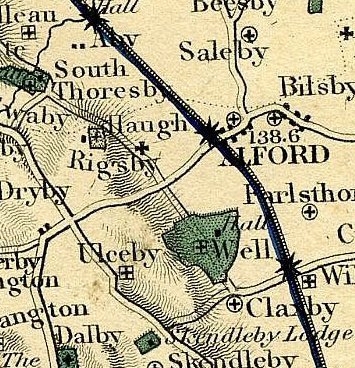
There are a number of sites hosting high resolution jpegs of old London maps. MAPCO has about 12 of them dating from 1560 to the end of the nineteenth century. MAPCO’s self-proclaimed intention is “to provide genealogists, students and historians with free access to high quality scans of rare and beautiful antique maps and views.”
However, Old London Maps has a similar but smaller collection of maps, focusing on London and dating from 1658 to 1872.
Cartographer's heaven.....
Yellow is for sharing

Worldchanging reports in 'Yellow Chairs and Neighborly Technology' how yellow has been used to denote a shared resource: previously a project using yellow bikes was used to denote that it could be shared. Now, another ad-hoc 'yellow project' has sprung up - yellow chairs! Yet these yellow chairs inform passers-by that they can sit down and use a free Wi-Fi network from a nearby house....nice touch!
"When a local household in San Jose decides its share its wireless network with neighbours and other strangers, the house members do not know what to expect. Few curious passersby stop by to see what would happen next. There is a rumour that somewhere else, at the other end of town, another household with a yellow chair is doing the same thing. What was going on? The rumour mill worked overtime, as people wondered why anyone would want to sit on a yellow chair to access a wireless network. But for those who sat on the chair, they knew it was a unique experience and a lot of fun. They had been ‘invited’ to enter personal networks, share music and movies and shout across town about war and politics if they so wished. They felt like cyber voyeurs, entering unknown territories, grabbing and dropping files across the neighbourhood, across the city, over a cup of coffee."
Is there a yellow chair near you?
Subscribe to:
Posts (Atom)