Tuesday, October 31, 2006

NEW WORK IN A MOBILE WORLD

First Call for Papers

NEW WORK IN A MOBILE WORLD

The Third International Winter Academy for Researchers and PhD students

University of Lapland, Rovaniemi, Finland

10-12 May 2007

Speakers

Lisa Adkins (Goldsmiths College, University of London)

Fuat Firat (University of Texas, Pan American)

Eeva Jokinen (University of Jyväskylä)

Claudio Minca (Royal Holloway, University of London)

Johanna Moisander (Helsinki School of Economics)

Beverley Skeggs (Goldsmiths College, London)

Anu Valtonen (University of Lapland)

Jussi Vähämäki (Chydenius-Institute)

And others…

What happens when one person’s leisure is someone else’s job? More and more people today are employed in cultural and leisure industries. They manufacture and serve leisure experiences for mobile consumers on holiday or at work. Tourism and travel industries are also among the major cultural forces of our era, since tourism differs from all other sectors of employment. It is intertwined with culture, economy, and social community life and, hence, makes an ideal subject for studies of mobilities and complexities in contemporary life where the public and the private are linked in unforeseen ways.

This meeting will contribute to interdisciplinary, cultural studies of new work and labour in tourism, travelling, and other mobile worlds. It will address the issues of tourism, travelling, hospitality, new work, and mobility through a variety of disciplines and schools of thought. New methodological insights will be emphasised for studying work in a mobile world in its concrete forms.

The meeting will build on the “sociability-friendly” concept for academic events developed in the previous two Winter Academies held in January 2003 and March 2004 at the University of Lapland (under the topics of Landscapes of Presence and Hostilities and Hospitalities). Discussions will be promoted through key note lectures and elaborated in three parallel workshops, where both senior scholars and PhD students are equally welcomed to present their work-in-progress. The invited guest speakers will also act as commentators and discussants in the workshops. The workshops are entitled:

* Landscapes of Work (geographies, regions, and taskscapes)

* Performances of Work (new work, gender, and cultural economies)

* Market-Related Work (cultural approaches in business studies)

The number of participants is restricted to around 40 to facilitate debate in joint sessions, workshops as well as during the excursions and dinners in the light nights of the North. Researchers worldwide, with their doctoral students, are warmly welcomed to join a possibility for both researcher training and meeting in one and same event. The registration fee (to cover all costs except for lodging and travel costs) will be 200 euros (early bird) and 300 euros (late bird).

Key dates for submission

Abstracts: 6 November - 22 December 2006 (one page, in MS WORD format; please, indicate which workshop you wish to participate in. The proposals will be selected according to their relevance to the topics of the conference. The accepted participants will be informed by 15 January 2007)

Early bird registrations – with or without a paper: by 31 January 2007

The registration form is available on the web page from 6 November 2006 onwards, and the registration is valid only after the payment.

Late bird registrations: by 1 March 2007.

Monday, October 30, 2006

London plans hybrid bus fleet

Ah, now that serious reports are coming out on global warming - which some politicians might listen to - there are moves being made in the transport sector. Ken Livingstone, London's mayor, wants every new bus from 2012 to run on hybrid motors that will generate 40% less carbon dioxide than their diesel-powered forebears. The Guardian reports in London plans hybrid bus fleet to cut carbon emissions:

'The aim is to put 500 hybrid buses on London's roads each year, with the aim of creating a green fleet. "We take very seriously our role in cutting CO2 emissions and tackling climate change," said Peter Hendy, London's transport commissioner. "We are sending a clear message to London and the transport industry that we are serious about this."

Hybrid buses use a battery pack, backed by a diesel engine. A trial of six hybrid buses ran into trouble in London this year when the diesel engines overheated, forcing a temporary withdrawal of the vehicles, which ran on the 360 route between Elephant and Castle and Kensington.'

Middle East May Have 1 Million Natural Gas Vehicles by 2010

We are being told now that Middle East May Have 1 Million Natural Gas Vehicles by 2010 and that 'despite being home to 65% of the world’s oil reserves, pressure to improve air quality and maximize crude oil revenues is driving Middle Eastern governments to implement alternative fuel schemes that dwarf many of those in oil-dependent nations'.

Also, that 'Government and private organizations in Egypt, Iran, United Arab Emirates and other oil-rich nations are implementing programs designed to reduce consumption of gasoline and diesel with natural gas vehicles. As many as one million natural gas-powered cars, trucks and buses could be plying Middle Eastern roads by the end of this decade, according to the International Association for Natural Gas Vehicles.'

Read more here

From Green Car Congress

Friday, October 27, 2006

Mobility in the future will be biometric

It's going biometric... first the e-passports (earlier post), and now fingerprints to open your front door, to access buildings of work and leisure, and even to have the 'right of movement'....

This BBC article Firms point to biometric future discusses some of the latest innovations to be displayed at the recent Biometrics 2006 conference in London last week:

Biometric systems - which identify a person by their unique physical or behavioural features - are rapidly being designed and applied to many aspects of our everyday lives.

Facial recognition can also be used to monitor individuals remotely - whether in crowds, clubs or public gatherings. Some systems pick out faces in a crowd and compare them to a stored database.

CrossMatch's FaceCheck is being used in casinos in Europe to identify unwanted or banned customers, and even gambling addicts who want to be stopped when temptation gets the better of them.


Looks like we're heading for an era of biomobility...

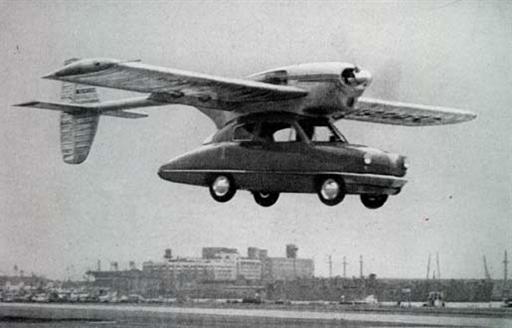
The Future from the Past


This exhibition deserves a mention - and what pictures!! Although the event has passed, the website is a treasure of past visions of future transport. It includes future visions of car/plane/public rapid transport/train - and other oddities - all accompanied by great pictures!

Its called Transportation Futuristics: Visionary Designs in Transportation Engineering

Visit the picture gallerys and see how today's mobility was envisioned in the past...

‘Many utopian themes, arising in fantasy, find their way to reality’ - Frederick Polak

'Killer app' for 3G??

Tomi Ahonen thinks he has discovered the first killer app for 3G - he said recently that 'social networking on mobile is already bigger by revenues, than social networking on the web'. In a personal email he said:

'Yes, for all the hype around MySpace, YouTube, Flickr, Bebo, Second Life, Worlds of Warcraft, Skype etc - we have already more revenues generated by similar social networking activity... on mobile phones of course. Led by such services as Cyworld from South Korea (in 6 countries), Mixi in Japan, Habbo Hotel from Finland (in over a dozen countries) and SeeMeTV in the UK, Italy and other 3/Hutchison markets - social networking on mobile is THE first elusive killer app for 3G !

How big? Informa tells us it is worth 3.45 billion dollars THIS YEAR. Yes, mobile digital communities are worth more than online adult entertainment, or mobile gambling or multiplayer gaming or iTunes. Like we say in our book, Communities Dominate!'

Tomi welcomes people to check out his claims at his blog

Well... killer apps come and killer apps go..... or do they??

Electronic passports are Go!

The deadline has passed for countries who have their visa-waivered to visit the US without an electronic-passport... the deadline was October 26th:

'Except for Andorra, Brunei and Liechtenstein, all of the 27 countries whose citizens can travel to the U.S. without a visa are now issuing "e-Passports," the department said in a statement. The passports include a radio frequency identification, or RFID, chip with the holder's information and a biometric identifier, such as a digital photograph.'

Yet there are security issues here:

The take-up of the electronic passports is bad news for privacy, said Bruce Schneier, chief technology officer of Counterpane Internet Security. "The risk in RFID passports is surreptitious access, and the security measures different countries are taking are varied in their scope and effectiveness," he said.

For protection, holders of an electronic passport should guard it well, Schneier suggested. "If you're stuck with one of these passports, use a photocopy whenever you can and keep the real one wrapped in tin foil," he said.


Well - this doesn't make people sleep easily... perhaps this will increase tin foil sales?

Read RFID passports take off

Wednesday, October 25, 2006

BT develops low-cost tsunami warning system

BT it appears has developed a low-cost sea monitoring technology that can be used to alert coastal communities of approaching floods or tsunamis:

'The "Secoas" system works by setting up a network of sensors that are attached to buoys along coastlines that monitor changes to sea levels and transmit that data back to shore by radio networks. The sensors can also be used in rivers.

The system has been designed to be cheap and easy to deploy. Traditional sea-monitoring systems cost tens of thousands of pounds to manufacture and thousands more to deploy, BT said. In contrast, each Secoas sensor should cost about £100 off the shelf, making the system accessible to poor countries.'

A type of global panopticon? Such environmental monitoring could go some way in making these issues both quick-time feedback responsive and accessible, perhaps, to a wider public through information dissemination.

Read BT develops low-cost tsunami warning system

Have SUV, will pay!

BBCNews has a piece on 'Gas guzzlers' face parking hike which says how the cost of residents' parking permits could be linked to car emissions under plans being considered in one of the country's most affluent areas:

'A Lib Dem council in London wants owners of gas-guzzling vehicles to pay more to park outside their homes. Richmond upon Thames residents with two high-emission cars could pay £750 a year, compared with £200 now, but the greenest cars would be exempt.

The council hopes other authorities will be encouraged to follow its lead. Richmond's plan follows national and local schemes targeting emissions and congestion and comes after the Lib Dem conference approved proposals to use new taxes on gas-guzzling cars and airlines to pay for income tax cuts.'

Size does matter!

Tuesday, October 24, 2006

Irish RFID passports

There is some controversey - or healthy debate! - over the fact that the newly arriving Irish RFID-enabled passports will not be safe from unauthorised readers. Engadget reports that:

'If you think you're at risk of identity theft and targeted assassination attempts with your new RFID-enabled passport, just think of the Irish for a moment: they started getting e-passports last week that don't even include the little mesh jacket that supposedly keeps our version safe from unauthorized readers. With Dutch and German passports based on the same ICAO guidelines having already been successfully intercepted and decrypted, people are understandably concerned that the US didn't think this policy all the way through before making it a requirement of the Visa Waiver program, and now it seems that some of the affected countries are willing to implement even shoddier security than a type that is already deemed risky. According to Ireland's Department of Foreign Affairs, shielding the new documents is not necessary because they can only be detected when open and close to a reader, even though the general consensus is that the read distance of the chips they're using can be as much as several meters. Apparently the immediate fear is not so much over stolen identities (because of encryption), however, as it is about terrorists being able to use so-called RFID skimmers for targeting groups of people based on their nationality.'

Read Ireland getting naked e-passports

Less sperm in the future?

The Guardian warns that men who use mobile phones for long periods at a time may be at risk of damaging their sperm...well - according to research by American scientists:

'Samples taken from men attending a fertility clinic revealed that their sperm declined steadily in number, quality and ability to swim as mobile phone usage increased. Where men used their mobiles for more than four hours a day, researchers found a 30% drop in sperm motility or movement and viability when compared with men who did not use a mobile phone.

Scientists believe the study is too preliminary to prove an unequivocal link between mobile phones and falling sperm counts, but the work received a cautious welcome from other scientists who called for further studies to rule out other factors known to influence sperm quality, such as age, weight, smoking, stress and whether people had sedentary jobs. Ashok Agarwal, who presented his findings at the American Society for Reproductive Medicine conference in New Orleans, stressed the study did not prove mobile phones were damaging male fertility, but urged scientists to investigate the possibility'

Read in full at Warning to male mobile phone users: chatting too long may cut sperm count

Sensor the River Ribble, in the Yorkshire Dales...

NewScientistTech in Intelligent sensors watch for impending floods describes how a grid of smart river sensors will monitor water depth and flow and be used to predict impending flooding on a Yorkshire river:

'By producing more accurate and concise data than existing monitoring systems, the network could give locals and government decision-makers earlier warning of rising trouble. Two of thirteen sensor nodes have so far been installed along a kilometre stretch of the River Ribble, in the Yorkshire Dales, and the rest of the network should be in place by the end of the year. "The river floods regularly after Christmas every year," says Danny Hughes, a computer and environmental scientist at Lancaster University, UK, who is working on the project.

The final network will contain three kinds of sensor node. Eleven will measure pressure from below the waterline in order to determine depth. The other two will monitor the speed of river flow – one using ultrasound underwater, and the other using webcams to track objects and ripples moving along the surface, from the riverbank.

Each node is smaller than a human fist and powered by batteries and solar panels. Each is also accompanied by a computer unit about the size of a packet of chewing gum, which contains a processor about as powerful those found in a modern cellphone.'

Via Smartmobs

Train firm to issue phone tickets

BBCNews reports that train passengers will soon be able to buy tickets on their mobile phone: 'Chiltern Railways, which operates from London through Buckinghamshire and Oxfordshire to the West Midlands, plans to deliver tickets to mobile phones. The new technology sends a barcode to a mobile phone via a text message, which passengers can then scan at the station ticket barrier.

Its hoped the method will make buying tickets easier for passengers and help reduce queues at stations. Neil Micklethwaite, commercial director for Chiltern Railways, said: "Mobile ticketing will mean easy purchases, anywhere, any time.'

Read at Train firm to issue phone tickets

Monday, October 23, 2006

Wi: Journal of the Mobile Digital Commons Network

Wi: Journal of the Mobile Digital Commons Network - is a new journal of the Mobile Digital Commons Network (MDCN) and publishes the latest in Canadian mobilities research, encompassing disciplines such as design, engineering, computer science, communications and media studies:

'Currently focusing on the research work of MDCN projects, wi aims to expand its purview in the coming months to include other national and international scholarship, artistic productions and design research on mobility, wireless technologies, and digital media.

Our focus is broad, from the use of digital technologies in research to the definitions of mobile gaming in the commercial sphere. '

Mobile Society

There is a new website called Mobile Society which states itself to be an academic research website 'focusing on social aspects of the mobile phones' .

It has contributions from the likes of Rich Ling and Nicola Green, with a growing bibliography - something to keep an eye on!

Thanks to mobile-society@groups.google.com

UK-wide CCTV to beat rogue drivers

Another look at the rise of camera surveillance on British roads: in UK-wide CCTV to beat rogue drivers the Independent writes:

'Cameras aimed at cracking down on drivers who block box junctions or ignore road signs could be introduced country-wide.

The Government is considering rolling out the CCTV system, currently in use in London. Every council in Britain could have the cameras in less than a year. Drivers in London are fined up to £100 for stopping in a box junction or ignoring no-right-turn signs.'

More money for the coffers...

Friday, October 20, 2006

UK Motorway congestion charging

The Times reports how motorists will face congestion charges on some of Britain’s busiest motorways under government plans to reduce queues by charging by the mile at peak times:

'Douglas Alexander, the Transport Secretary, has asked the Highways Agency to identify a suitable section of the 4,800-mile strategic road network for a congestion-charging trial. The M25, London’s orbital motorway, is likely to be considered as it has the worst congestion and traffic is continuing to grow rapidly. A fourth lane is being added to the remaining three-lane sections and one option would be to charge for access to the new lane at peak times.

The trial would be a forerunner to a national charging scheme covering all roads, which the Government has said could be introduced around 2015. Congestion on motorways and A-roads would reduce by 34 per cent if charges of up to £1.34 a mile were introduced, according to a study published by the Department for Transport in 2004.'

I expect this pay-as-you-drive system will be a consequence of the Galileo satellite positioning system that EU is currently putting into place.


Read Congestion charging spreads to motorways

Tokens with the phone

The Guardian in Now you can go shopping with your mobile phone talks about a pilot project in Manchester to enter football games with only a phone:

'Manchester City fans are at the forefront of this predicted development: 200 season ticket holders are trialling a system through which they "show" their Nokia 3320 handset to an automatic reader to get into a game, instead of handing a card to a gate attendant. Within 12 to 18 months, claim handset makers, this Near Field Communication (NFC) technology, which allows the handsets to buy and store low value electronic tokens (such as sport and transport tickets), will start being standard on new handsets. The Nokia 3320, used in the football trial, is already available and like the company's more rugged 5140i is NFC-capable - once a shell containing the necessary chips and mini-transmitter is fitted to the handset. Such capabilities will be shipped inside mobile phones from next year, Nokia predicts.'

Also in The Guardian - Why isn't there a text message version of 999? :

'Emergency 999 calls have become a feature of life in the UK since being introduced in 1937, but there is not yet a standard equivalent for texters. Some police forces do operate limited emergency SMS services, aimed at preregistered users with hearing and speech impairments. While it undoubtedly helps those individuals, such bureaucratic systems are not necessarily that useful in a tight spot.

And there are other problems with SMS, say those with experience. A spokesman for West Yorkshire police, which operates a text service, pointed out that messages cannot be prioritised by the mobile networks - thus raising the possibility that emergency communications may not arrive for several hours.'

Tagged Mail

CNet News relates in Australia Post tracks mail delivery using RFID how more than 12,000 radio frequency identification (RFID) tags are being used in letters every month to track the delivery of mail by Australia Post:

'The government business enterprise has replaced manual monitoring of mail delivery with RFID tags. In its annual report released Wednesday, Australia Post said RFID monitoring of mail came into effect in July after being run in parallel with manual monitoring for six months.

"We installed radio frequency identification technology that will enhance our ability to monitor our service performance and provide a better analysis of potential problems within our delivery network," the report said. Under the system, monitoring company Research International inserts RFID tags into "test letters" that can be tracked throughout the course of their journey.'

Question is - will it improve the service? Personally, I think all politicians should carry RFID tags...

Thanks to Smartmobs

Thursday, October 19, 2006

Immobility of desperation?

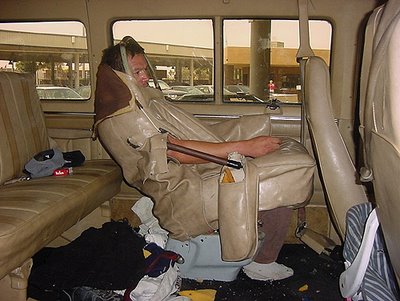
Well, trying to cross borders is where the immobility of mobility becomes a paramount juxtaposition. And here I thought it would be illustrative to show 2 pictures of desperation: known simply as "the chair guy"


Via Subtopia