Friday, May 15, 2009

Social Innovation Camp

The organisers of Social Innovation Camp claim that it is 'an experiment in creating social innovations for the digital age', and they are currently looking for the best ideas for web-based tools that can change stuff that matters. A camping weekend in Glasgow brings together some of the best of the UK's software developers and designers with those at the sharp end of social problems. Their mission is to turn six back-of-the-envelope ideas that could change the world into social start-ups - complete with working software. And all in under 48 hours - and there's only one week to go!!:

You’ve got until Friday 22nd May 2009 to send us your idea that uses the web to create social change and you could be joining 100 other participants to try and make it a reality.

And this week, we’re really pleased to be able to announce some of our prizes for the weekend.

At the end of each Social Innovation Camp, we run a Show and Tell where everyone pitches what they’ve built in the weekend.

We’ll be awarding some prizes to the ideas we think have shown most promise. And this time around, we’re lucky enough to be supported by our partners Firstport, IfLooksCouldKill and O Street.


Go to their website

-

Wednesday, May 13, 2009

The future does not have a driver

It seems that driverless public transport is the new hype in the Netherlands, and Rotterdam has the scoop for so far!

A driverless suttle bus in Rotterdam follows a magnetic strip embedded in a concrete roadway.    Photo Dirk-Jan Visser A driverless suttle bus in Rotterdam follows a magnetic strip embedded in a concrete roadway. Photo Dirk-Jan Visser

The main disadvantage of public transport is that it requires drivers, and the driver is not only the most expensive but also the most dangerous part of the equation. "Computers are cheaper, they never get tired and they are much better drivers," says Jan van Dijke of the Dutch research institute TNO Automotive. "Nine out of ten traffic incidents are the result of human error."

Van Dijke is in charge of the European Citymobil project, which studies the advantages of driverless public transport, among other things. One current experiment is in Rotterdam, where for the past few weeks a driverless bus has been shuttling passengers from the Kralingse Zoom metro station to the Rivium industrial zone. The shuttle is a miracle of efficiency and punctuality. It follows a magnetic strip embedded in a concrete roadway. The shuttle started running four years ago but the project was halted after a frontal crash, which the technicians assure was due to human error.

Driverless public transport is on the rise in many other places. Amsterdam plans to do away with metro operators from 2014.


Read more from original article here (thanks to RA)

-

Monday, May 11, 2009

The city and the crowd

Here's an interesting video-post from over at Space & Culture that looks at early city film montage from 1928:


The city montage from King Vidor’s 1928 silent film, The Crowd

The montage of the busy city streets, enormous crowds, and speeding trains that is Johnny’s introduction to New York City is frantic and a bit awe-inspiring, especially the great shot that climbs the side of the building where Johnny works. Many of the crowd shots were done with a hidden camera, and in one scene, when a traffic cop seems to tell us to move along, he was actually instructing Vidor and his crew to move.”

From 'The city and the crowd'

-

Saturday, May 09, 2009

Virgin Galactic’s Test Flight

Looks like Wired's 'Autopia' managed to get its hands onto Virgin Galactic's latest - so the trip's still on! (if you can afford it, of course)

vms_eve_01_sized

Space junkies and wannabe astronauts rejoice - we’ve got exclusive video of Virgin Galactic’s recent test flight in the Mojave.

Wired.com got its mitts on the first official cockpit video and other footage from the recent test of Virgin Mothership Eve at the Scaled Composites skunkworks operation in sunny SoCal. Scaled Composites and Virgin tend to keep the test results hush-hush but say “several recent published articles have been sufficiently inaccurate and negative” to make them “set the record straight.”

They could be referring to reports by FlightGlobal that VMS Eve, the prototype of the White Knight 2 that took to the air, suffered a tail strike during an April 20 flight and experienced rudder problems. Scaled Composites, in a statement (.pdf), called the test “very successful” and said, “we only needed to adjust the rudder forces.”


Read more here - Virgin Galactic’s Test Flight

-

Thursday, May 07, 2009

Another EV supercar

It seems that the Silicon Valley trend for expensive EV supercars continues...


autopia-wave-i

Another day, another start-up promising an electric car with awesome range.

This time it’s EV Innovations, the same guys behind the Inzio electric supercar we told you about a few weeks back. The Inzio is billed as a Tesla-beater and has a $139,000 price to match. That’s a lot of scratch, which is why the company says it’s working on an electric commuter car that’ll carry a $34,000 sticker price when it goes into limited production in a year.

It’s called the Wave, and EV Innovations says it will have a range of up to 170 miles and a top speed of 80 mph. That’s a bit shy of the top speed claimed by the Aptera 2e. But Ron Cerven, director of product development at EV Innovations, says anything the Wave gives up to the Aptera in terms of speed it makes up for in size.


Read here for more -Riding the EV Wave

-

Tuesday, May 05, 2009

Energy and equity: a beginner's guide to designing a zero carbon transport system

An inaugural lecture to be given at York University byProfessor John Whitelegg on 18th May 2009. Anyone can attend and it will also be streamed on the Internet. Those people familiar with Whitelegg's work will know he has been involved for many years in campaigning for better designed transport systems in terms of urban renewal and energy.

Title: Energy and equity: a beginner's guide to designing a zero carbon transport system

Abstract: Currently there are about 750 million vehicles on the planet. A prominent German forecasting organisation has predicted this will rise to 2.3 billion by 2030. Ivan Illich wrote "Energy and Equity" in 1974 and demonstrated the absurdity of our dependence on oil for routine daily trips and the illogicality of human behaviour devoting 1600 hours each year to service the demands of the car in order to travel 7500 miles at an average speed of 5mph. 25 years later the absurdities noted by Illich are now global and intensifying with very large year on year increases in car ownership and use in India and China. Each day our global mobility requires 5.8 million tonnes of oil and kills 3000 mainly poor and non-motorised citizens. This is expensive and requires very large public subsidy and is intimately linked with poor health outcomes ranging from obesity to hospital admissions as a result of poor air quality. This inaugural lecture explores the intimate geography of oil dependent transport, its global trends, its links with climate change and peak oil and explains its grip on society and decision makers and charts a new transport revolution that at a low cost will deliver socially just accessibility to our destinations at a zero carbon cost.

Venue - University of York, P/L001 Physics 1730 on 18th May 2009

-

Monday, April 27, 2009

Fatwa Issued Answering Cell Phone during Aayat

Textually.org has some revealing information on how mobile phones - ringtones, sms - are intervening with Muslim traditions:

140235601_0f3d151803_o.jpg

A Muslim organization has issued a fatwa over using verses from the Koran as ringtones, saying that answering the call while the aayat (verses from the Koran) is going on is a sin. It argues that people answer calls midway through the aayat, leave the verse incomplete. TechTree reports via Channel 4.

quotemarksright.jpgThe panel of clerics in Kanpur India, also said that taking a cellphone to the toilet as it rings is a sin because aayat cannot be heard in a toilet. They also condemned the habit that people have of keeping cell phones on vibration mode while attending prayer services.

A fatwa in the Islamic faith is a religious opinion on Islamic law issued by an Islamic scholar.quotesmarksleft.jpg

Other cell phone related Fatwas:

-- A Fatwa Against Ringtones - An imam at a Mosque in Saudi Arabia issued a fatwa against mobile phones after one rang during prayers on Saturday, playing Arabic pop music.

-- Fatwa: No pictures of the bride by SMS - Cheikh Abd Al-Muhsin Al-’Obikan, a member of Saudi Arabia's Shura Council and advisor to the Ministry of Justice, has issued a fatwa forbidding a fiancĂ© to look at pictures of his fiancĂ©e uploaded online by SMS, for fear that others could see her before their marriage.


Read original post - 'Fatwa Issued Answering Cell Phone during Aayat'

-

Friday, April 24, 2009

Ringing in the Vote: Mobile Phones in the 2009 Indian Elections

With the Indian elections underway, there is bound to be some 'mobile' news on the events. Here's one such interesting post:

The world's largest democracy, India, is holding its general election this year. The month-long elections to the 15th Lok Sabha, the Indian Parliament, will be held in five phases between April 16th and May 16th when the final results will be announced.

As India's 714 million voters prepare to elect their 543 representatives, they are witnessing a range of digital initiatives from political parties, civil society organizations, media houses and even corporations. In fact, some observers are calling this India's first digital elections.

Leading the packed ballot is 82-year-old Lal Krishna Advani, the prime ministerial candidate of the Hindu nationalist Bharatiya Janata Party, who has embarked on an Obama-style new media campaign. Part of the campaign are a blog, a blogger outreach program, one of the most aggressive online ad campaigns ever seen in India, and an ambitious SMS campaign that will reach 250 million of India's 400 million mobile subscribers.

Rajesh Jain's Netcore Solutions, which is running the SMS campaign for BJP, has bought an inventory of 1 billion SMSes for the campaign. Rajesh is also a part of the Friends of BJP group, which is running a social network and an opt-in MyToday-based SMS channel to support BJP's campaign (Indian Express).


Read more on this at 'Ringing in the Vote: Mobile Phones in the 2009 Indian Elections'

-

Wednesday, April 22, 2009

Electric Peapod now available!

Today - April 22nd - is Earth Day...and so the Peapod makes its appearance... tempted?


Peapod_01

The long-awaited, often-advertised Peapod will be available for order on Earth Day, April 22. Coincidentally, the 22nd also is Administrative Assistant's Day. We expect to see a lot of greenies and maybe some secretaries tooling around in their $12,500 Peapods at no more than 25 miles an hour.

While the Peapod prototype had clear driver and passenger doors that looked like a Dyson vacuum cleaner, the production version (shown above) of the neighborhood electric vehicle resembles George Jetson's Deux Chevaux. Company director and brand guru Peter E. Arnell, whose initials inspired the company's name, told Treehugger.com the car's appearance was inspired by "Japanese bullet trains, storm troopers from the film Star Wars, space helmets and turtles." There's also a very prominent "smile" to the car's grill, but what else would you expect from a man whose firm devised Pepsi's new logo with the Cheshire grin and laughably pretentious backstory?

The feel-good vibe continues with a glance at the in-dash iPod (sold seperately). Edmunds says every trip concludes with a carbon-footprint analysis, while another app tells you exactly how much money you've saved by leaving the family truckster at home.


Read more at 'Smiling EV Debuts on Earth Day'

-

Monday, April 20, 2009

P.U.M.A. - the Future of Urban Transportation?

Wow - here's the new Segway mobility vehicle...it's their PUMA - “Personal Urban Mobility and Accessibility”- and you have to admit, it does look nifty


Is this the car of the future? For more photos, check out this photo gallery by Autoblog. (Image via Gather.com)

Last week, General Motors and Segway unveiled the much-hyped Project P.U.M.A, which stands for “Personal Urban Mobility and Accessibility,” an electric two-wheeler prototype vehicle that is supposed to transform the way city-dwellers move around. The 300-pound, lithium-battery-powered, pod-shaped vehicle can go up to 35 miles per hour in a 35-mile range with a 35 cent charge.

The New York Post says it is “a vision of how to combat difficult future urban planning and development as urbanization increases and green technologies becomes more important.” (See a video of PUMA in action, riding around New York City, here.)


Read more over at 'GM, Segway Unveil P.U.M.A. as Future of Urban Transportation'

-

Saturday, April 18, 2009

New Pew survey on Internet use in US 2008 election

Smartmobs has a post on The new Pew survey which shows that, for the first time, the Internet is the primary source of political news for a majority of Americans during a national election:

It’s not just about getting news — citizens actively debted, blogged, organized online. That’s not news insofar as so many of us suspected this — but the empirical evidence always trumps punditry, whether it is online or not:

Some 74% of internet users–representing 55% of the entire adult population–went online in 2008 to get involved in the political process or to get news and information about the election. This marks the first time that a Pew Internet & American Life Project survey has found that more than half of the voting-age population used the internet to get involved in the political process during an election year.

Several online activities rose to prominence in 2008. In particular, Americans were eager to share their views on the race with others and to take part in the online debate on social media sites such as blogs and social networking sites.


Read more at - 'New Pew survey on Internet use in US 2008 election'

-

Thursday, April 16, 2009

A coming electric car revolution?

It appears that the UK government is 'trying' to make some moves towards promoting electric cars - what took them so long? They announced today that consumers are to be offered incentives of up to £5,000 to purchase an electric car, and that electric cars will be placed in cities across the UK as part of the launch:

The proposals are part of a £250m strategy, seen by the Guardian, spelling out a revolution in Britain's road transport network based on ultra-low carbon vehicles. It will be launched today by Geoff Hoon, the transport secretary, and Lord Mandelson, the business secretary, with the aim of kickstarting the market for cleaner road vehicles and slashing the UK's CO2 emisisons.

Hoon said yesterday that decarbonising road transport had a big role in helping the UK meet its targets of reducing CO2 emissions by 26% by 2020 and 80% by 2050. "Something like 35% of all our carbon emissions are caused by domestic transport," he said. "Of that, 58% of the emissions are caused by motor cars."

The focus of the strategy, in the first instance, would be on urban transport. "Given that 60% of journeys by car are under 25 miles, there's no reason why someone using a car for commuting on a regular basis will not be able to charge up their car at home, take it to work and come home again well within the distance an electric vehicle should be able to travel," Hoon said.

It's a start..yet more needs to be done than just 'tweeking' the fuel...this still does not solve the problem of urban traffic or individualised movement.


Read more at - 'Labour's £5,000 sweetener to launch electric car revolution'

-

Monday, April 13, 2009

Police using Google Street View-style cars to spy on motorists

Well, the controversy just keeps growing: the issue of mobile surveillance. Now 'google-style' cars are being trialled for spying on motorists bad habits:

Google Street View car: Police using Google Street View-style cars to spy on motorists
A Google Street View car

Officers are trialling new cars with cameras fitted to telescopic poles on their roofs to film drivers using mobile phones, eating or applying make-up while behind the wheel.

The Smart cars, which bear similarity to those used by Google to map the country's streets, are intended to cut the number of fatalities on Britain's roads, police say.

However, the pilot scheme has come under fire from motoring groups who claim that the tactics are an "infringement" of drivers' liberty.

Nigel Humphries, from the Association of British Drivers, said: "They might as well put something in cars to test what drivers are thinking.

"Apart from that it's going to be counterproductive. While the camera is looking into cars, other motorists could be driving erratically and causing a danger on the roads."

The scheme is being pioneered with two of the vehicles in Manchester, where distracted motorists have reportedly been involved in 406 accidents in the past two years.


Read original post - 'Police using Google Street View-style cars to spy on motorists'

-

Saturday, April 11, 2009

Energy...without hot air

A useful new book titled 'Sustainable energy - without the hot air' by David McKay, Professor of
Natural Philosophy at Cambridge University, is a response to an urgent global challenge: how to make sense of the conflicting claims and information bandied about on all matters eco. The book is filled with insights like this one:

"Leaving mobile phone chargers plugged in is often held up as an example of a behavioural eco-crime. The truth is that the amount of energy saved by switching off a phone charger is exactly the same as the energy used by driving an average car for one second".


Although you can buy a hardcopy, the book is also available as a free download - go here

Friday, April 10, 2009

Transforming Cities into Food Generators

Apparently in 2007 Lord Cameron of Dillington, first head of the UK Countryside Agency, famously remarked that - "Britain was ‘nine meals away from anarchy.’ Britain's food supply is so totally dependent on oil - 95 per cent of the food eaten there is oil-dependent - that if the oil supply to Britain were suddenly to be cut off it would take just three full days before law and order broke down. "We rely on a particularly vulnerable system. Britain needs to invest seriously in agriculture infrastructure if we are to avoid food crisis" said the noble Lord at the time". Here is an interesting post over at Doors of Perception that discusses this further:


I'm not sure that much action has so far followed these remarks, but an exhibition opening in London next month explores what those investments might be. The show looks at different ways that cities might be transformed from consumers of food to generators of agricultural products, and at how food production can be incorporated into the urban environment at both industrial and domestic levels.

A highlight of the London show is a photographic and filmic record of the Dott 07 Urban Farming project in Middlesbrough. Good to see London following so promptly - only three or four years behind the northern town. In Middlesbrough itself, since Dott 07 itself ended, the town's Council is expanding the Urban Farming programme. The Bohm and Viljoen map (below), created for Dott 07, that plots sites of productive potential, is a reference point for a raft of new initiatives. The Council recently won a £4 million (4.3 million euro) grant to run a "cocktail" (their word) of food and health projects, and the plan is to make the Town Meal an annual event to showcase the results of this new work.


Read more at - 'London "nine meals away from anarchy"'

-

Wednesday, April 08, 2009

Tesla unveils the electric 'family car of the future'

Tesla Motors continues to 'unveil' it's latest car etc..... the company has been promising alot for a long time and little has materialized. This - reported by the Guardian - is their latest offering...yet their product is still for those with money...and in today's world... will they have missed the boat?


Media gather around the new Tesla Model S all-electric sedan car

Media gather around the Tesla Model S at the car's unveiling in Hawthorne, California. Photograph: Robyn Beck/AFP/Getty Images

Tesla Motors yesterday unveiled a pair of prototype all-electric cars that the fledgling automaker hopes will be the family friendly, mid-sized car of the future.

"Welcome to Model S," said designer Franz von Holzhausen as he pulled the covers off the cars, which will seat seven people and travel 300 miles (483km) on a single charge.

Tesla hopes to begin producing the flashy, five-door car at a yet-to-be-disclosed location in Southern California by the final quarter of 2011.

Within a year, it wants to turn out as many as 20,000 of the vehicles annually.


Read more at - 'Tesla unveils the electric 'family car of the future''

-

Monday, April 06, 2009

Communities print own currencies

More movement in the micro-finances; we see a not unexpected rise in communities issuing there own local currencies in an effort to promote localised growth. One report notes that

A small but growing number of cash-strapped communities are printing their own money.

Borrowing from a Depression-era idea, they are aiming to help consumers make ends meet and support struggling local businesses.

The systems generally work like this: Businesses and individuals form a network to print currency. Shoppers buy it at a discount — say, 95 cents for $1 value — and spend the full value at stores that accept the currency.

Workers with dwindling wages are paying for groceries, yoga classes and fuel with Detroit Cheers, Ithaca Hours in New York, Plenty in North Carolina or BerkShares in Massachusetts.


Read more at - 'Communities print own currencies'

-

Saturday, April 04, 2009

From Soviet-era Ferry to Luxury Yacht

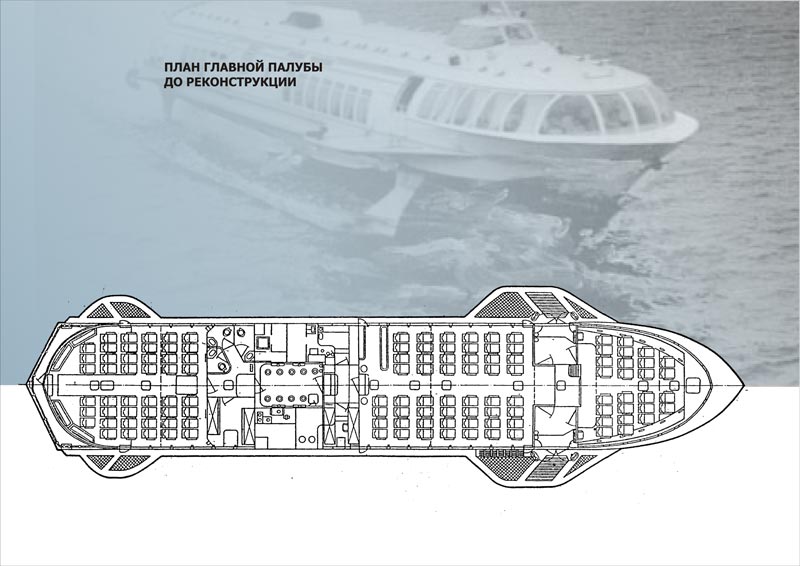
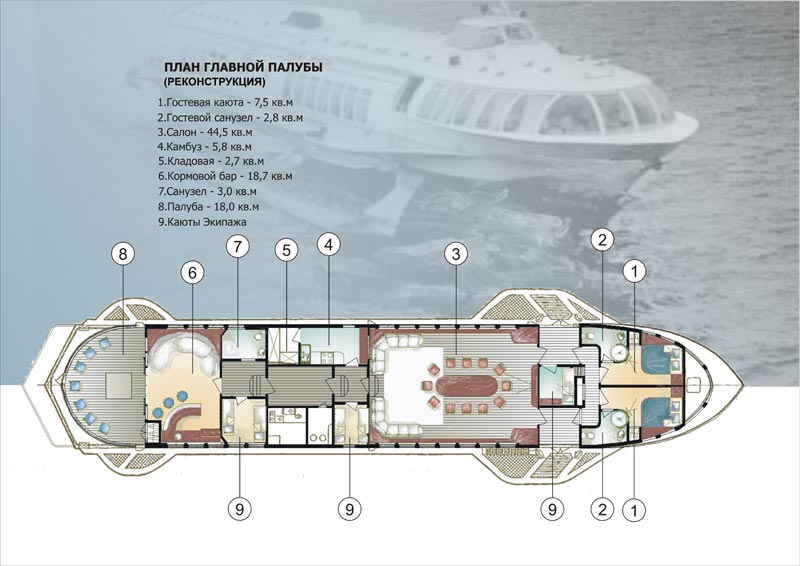
Here's another oddity of conversion. An unnamed Siberian governor decided it would be a good idea to convert a 1970s Soviet high-speed ferry boat into a personal luxury yacht:


Boat1


The vessel started life in the 1970s as a Metor hydrofoil, the most famous model of passenger ferry to operate behind the Iron Curtain. With legendary reliability and a top speed of 40 mph, numerous other Meteors remain in service in former Eastern-bloc countries. This particular boat was taken off ferry duty and converted for private use in 2005. Before and after floor plans show that the boat's passenger seats and snack bars were replaced with sitting areas, a full kitchen, dining room, bedrooms, and a swimming platform. The only non-cosmetic renovations were new "de Laval" style exhaust nozzles meant to increase the boat's top speed.

Even with that added thrust, this boat can't escape good taste. The public areas are stylish enough for an evil genius in search of a chic hideout, but that's where the design philosophy begins to crumble. Animal skins, white leather couches, and shag carpeting reveal a fantasy of a Soviet teen who, after reading smuggled copies of Playboy, built his boyhood dream of what a Nixon-era American bachelor pad looked like. Judging by that cat-astrophic leopard-print master bedroom, we think the boat's new name of "Faithful" is meant to be ironic.


Boat3


Read more at - 'Soviet-era Passenger Ferry is One Boat-Ugly Luxury Yacht'

-

Friday, April 03, 2009

Do we now need ID cards for regional trips?

Another worrying development in the realm of 'restricted mobilities': this time the proposal for needing to track the movements of around 60million domestic UK passengers a year:

Passengers on ferries to the Isle of Wight and Scottish islands such as Mull and Skye will soon have to carry identity papers to comply with new police anti-terror powers.

And travellers flying between British cities or to Northern Ireland face having their personal data logged when booking tickets and checking in.

Until now ferry passengers on most routes in Britain have not been required to produce ID and internal flight passengers only face random police checks.

But under new Government security rules that will come into force next year, personal data, including name, date of birth and home address, will be typed into a computer record for the police by the booking clerk or travel agent.

Passengers will also face further ID checks when boarding their flight or ferry.


I would like to think that this was an April Fool's joke - yet the story was last updated on 29th March '09....

Read original article - 'Now we need ID cards for a trip to the Isle of Wight'

-

Wednesday, April 01, 2009

Car surveillance box to track drivers

Here is something that was discussed in the forthcoming book 'After the Car' - the introduction of 'black boxes' on cars to enable the tracking of the whereabouts of drivers anywhere in Europe. The Guardian reports that

The government is backing a project to install a "communication box" in new cars to track the whereabouts of drivers anywhere in Europe, the Guardian can reveal.

Under the proposals, vehicles will emit a constant "heartbeat" revealing their location, speed and direction of travel. The EU officials behind the plan believe it will significantly reduce road accidents, congestion and carbon emissions. A consortium of manufacturers has indicated that the router device could be installed in all new cars as early as 2013.

However, privacy campaigners warned last night that a European-wide car tracking system would create a system of almost total road surveillance.

Details of the Cooperative Vehicle-Infrastructure Systems (CVIS) project, a £36m EU initiative backed by car manufacturers and the telecoms industry, will be unveiled this year.


Also, that

The system uses the same connections as those in mobile telephones, Wi-Fi internet and security tags attached to clothes in shops.

A car will constantly stay in touch via all these methods of communication, stashed in a router behind the dashboard.

Crucially, vehicles beam out a "heartbeat" message, revealing their precise location, speed and direction, to all other cars within a 400m range.

Read - 'Highway Wi-Fi: How the new tracking system works'


Read original article at 'Big Brother is watching: surveillance box to track drivers is backed'

With this and the new e-borders scheme blogged previously, it sounds as if all mobilities will be under near-total surveillance: is this the future?

-